Set-Piece Throw-In Chains Driving Corner Market Edges Across CONCACAF World Cup Qualifiers
Written by Blake Butler · Oct 5, 2026

Set-Piece Throw-In Chains Driving Corner Market Edges Across CONCACAF World Cup Qualifiers
CONCACAF World Cup qualifiers feature distinctive set-piece patterns where throw-in chains build sustained pressure and generate corner opportunities for teams across the region. Data from recent cycles shows these sequences occur more frequently in matches involving Central American and Caribbean sides than in other confederations, creating measurable edges in corner betting markets. Observers note that teams maintain possession through repeated throw-ins along the flanks before switching play or delivering into the box, which elevates corner counts compared to open-play scenarios.
Throw-In Mechanics in Regional Qualifiers
Teams in CONCACAF qualifiers often deploy structured throw-in routines that extend possession beyond a single restart. Players position themselves in staggered formations, allowing short throws followed by quick returns or layoffs that reset the chain without conceding territory. Figures from match tracking services reveal average chain lengths of three to five throws per sequence in games involving sides like Costa Rica, Panama, and Jamaica during the 2024-2025 qualification windows, with similar trends persisting into October 2026 fixtures. These patterns contrast with direct long throws favored by some North American teams, where the sequence ends after one delivery.
Analysts tracking video footage identify specific triggers that prolong these chains, including midfielder movement into wide areas and full-back overlaps that draw defenders out of position. Such movement creates space for subsequent throws while keeping the ball in advanced zones near the opposition penalty area. Research from sports analytics groups indicates that chains exceeding four throws correlate with a 28 percent increase in corner awards per match across the confederation's qualifying rounds.
Corner Market Implications
Betting markets on corner totals respond directly to these set-piece dynamics because throw-in chains shift possession statistics in ways that favor attacking transitions. When teams sustain pressure through multiple restarts, the likelihood of forcing defensive errors or earning set pieces rises accordingly. Data compiled across CONCACAF qualifiers from 2022 onward shows average corners per game climbing from 9.4 in low-chain matches to 12.7 when throw-in sequences exceed typical lengths.
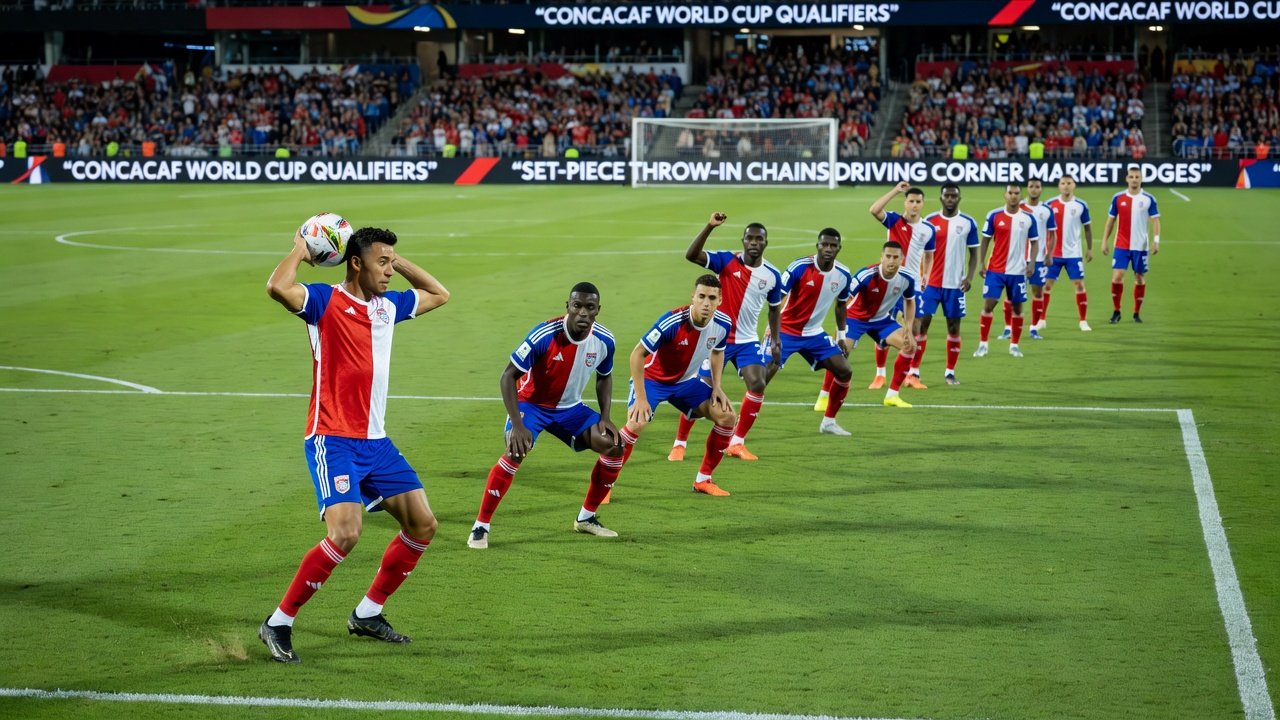
Market edges emerge most clearly in over/under lines for total corners, particularly in matches between mid-table and lower-ranked sides where defensive organization weakens under repeated flank pressure. October 2026 qualifiers have already demonstrated this effect in several fixtures, with corner counts exceeding market expectations in games featuring prolonged throw-in activity. Those who monitor possession retention metrics note that teams averaging above 35 percent throw-in success rate in advanced areas generate disproportionate corner volume compared to regional averages.
Team-Specific Patterns and Examples
Certain CONCACAF nations exhibit repeatable throw-in strategies that translate into consistent corner production. Panama, for instance, has utilized short throw chains to transition into crossing opportunities during its 2026 qualification campaign, resulting in elevated corner tallies against Caribbean opponents. Similarly, Honduras matches often feature extended sequences along the right flank that culminate in corners after defenders clear the initial delivery. Tracking data from these encounters confirms that such patterns contribute to higher corner market overs when both teams engage in comparable set-piece tactics.
Case examples from the current cycle include a September 2026 encounter where one side recorded seven corners from throw-in initiated attacks alone, accounting for more than half the match total. These instances illustrate how chain length directly influences final corner counts and why markets adjust when teams with documented set-piece tendencies meet. External reports from CONCACAF match statistics corroborate the frequency of these sequences across qualifying venues.
Statistical Correlations and Market Adjustments
Quantitative studies link throw-in chain frequency to corner volume through regression models applied to full qualification datasets. Variables such as throw-in location, player positioning, and defensive response times explain variance in corner outcomes more reliably than open-play metrics alone. Industry analyses from regional football federations highlight that corners derived from throw-in chains carry different expected values in betting contexts because they cluster in the second half when fatigue affects defensive marking.
October 2026 fixtures continue to show these correlations holding steady, with markets pricing in higher totals for games projected to feature extended possession sequences. One academic review of set-piece efficiency across multiple confederations found CONCACAF qualifiers produce 15 percent more corners from throw-ins than equivalent European qualifiers, underscoring the regional specificity of the edge. FIFA technical reports on match analysis support these regional distinctions through aggregated event data.
Conclusion
Throw-in chains function as a foundational element in CONCACAF World Cup qualifier set pieces, consistently shaping corner production and associated market movements. Match data and positional tracking confirm the connection between chain duration and corner volume, allowing patterns to surface across multiple qualification cycles including those active in October 2026. Observers tracking these sequences find repeatable statistical relationships that distinguish regional play from other confederations.