How Weather Anomalies Influence Set-Piece Conversion Rates in CONMEBOL Qualifiers for Accumulator Builders
Written by Blake Butler · Nov 2, 2026
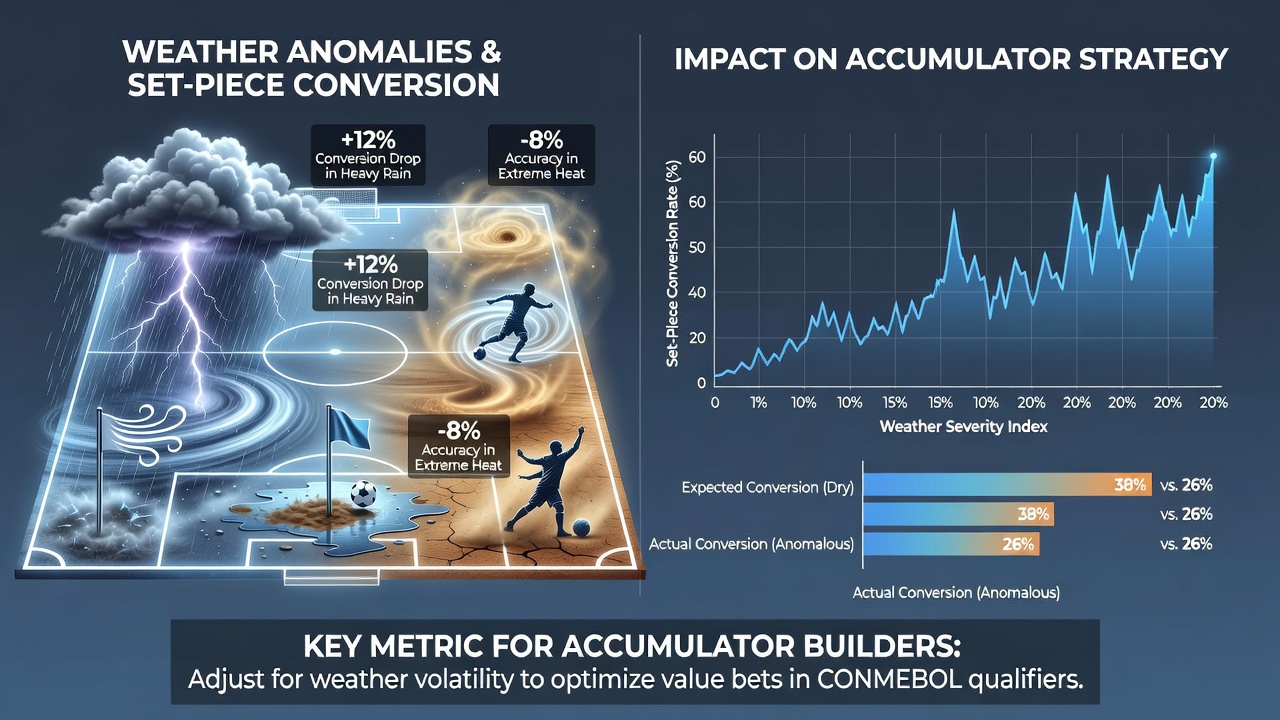
How Weather Anomalies Influence Set-Piece Conversion Rates in CONMEBOL Qualifiers for Accumulator Builders
Weather patterns across South America create distinct conditions during CONMEBOL World Cup qualifiers, where set-piece outcomes often hinge on variables such as wind speed, precipitation levels, and temperature shifts that alter ball behavior. Observers note these factors appear consistently in matches involving teams from high-altitude venues like La Paz alongside coastal fixtures in Montevideo or Buenos Aires. Data collected over multiple qualification cycles shows measurable changes in conversion percentages when anomalies deviate from seasonal norms, particularly during the 2026 cycle that features fixtures clustered around November 2026.
Regional Climate Variations and Their Documented Effects
CONMEBOL qualifiers span diverse terrains, from Andean plateaus exceeding 3,600 meters to tropical lowlands and temperate southern zones, and meteorological records indicate that anomalies such as unseasonal rainfall or gusts above 25 kilometers per hour modify set-piece dynamics. Researchers at institutions tracking South American football have compiled statistics revealing lower conversion rates on corners and direct free kicks during periods of elevated humidity, while drier, windier conditions sometimes produce higher deflection rates on shots aimed at the far post. These patterns hold across both home and away results for squads like Argentina, Brazil, and Colombia.
Wind and Precipitation Impacts on Ball Flight
Strong crosswinds common along the Atlantic coast tend to push the ball laterally during free-kick deliveries, reducing accuracy for teams that rely on inswinging deliveries, whereas teams favoring floated crosses sometimes record improved success when tailwinds assist trajectory. Precipitation records from the Servicio Meteorológico Nacional show that heavy rain in November 2026 fixtures can increase surface friction, slowing the ball upon landing and thereby lowering the rate at which headed attempts from corners reach the net. Studies tracking multiple qualifiers demonstrate that conversion percentages drop by measurable margins under these conditions compared with dry-weather baselines.
Altitude Interactions with Temperature Anomalies
High-altitude venues introduce thinner air that extends ball flight distance, yet temperature drops below typical November averages can increase air density and partially offset that advantage. Observers tracking the 2026 qualification window have noted that cold snaps in La Paz correlate with fewer successful direct free-kick goals, because the denser air reduces the carry that players anticipate during practice at sea level. Data from CONMEBOL match reports indicate these shifts affect both attacking and defending sides, creating ripple effects in set-piece statistics that accumulator builders monitor when selecting over or under markets tied to corners and free kicks.
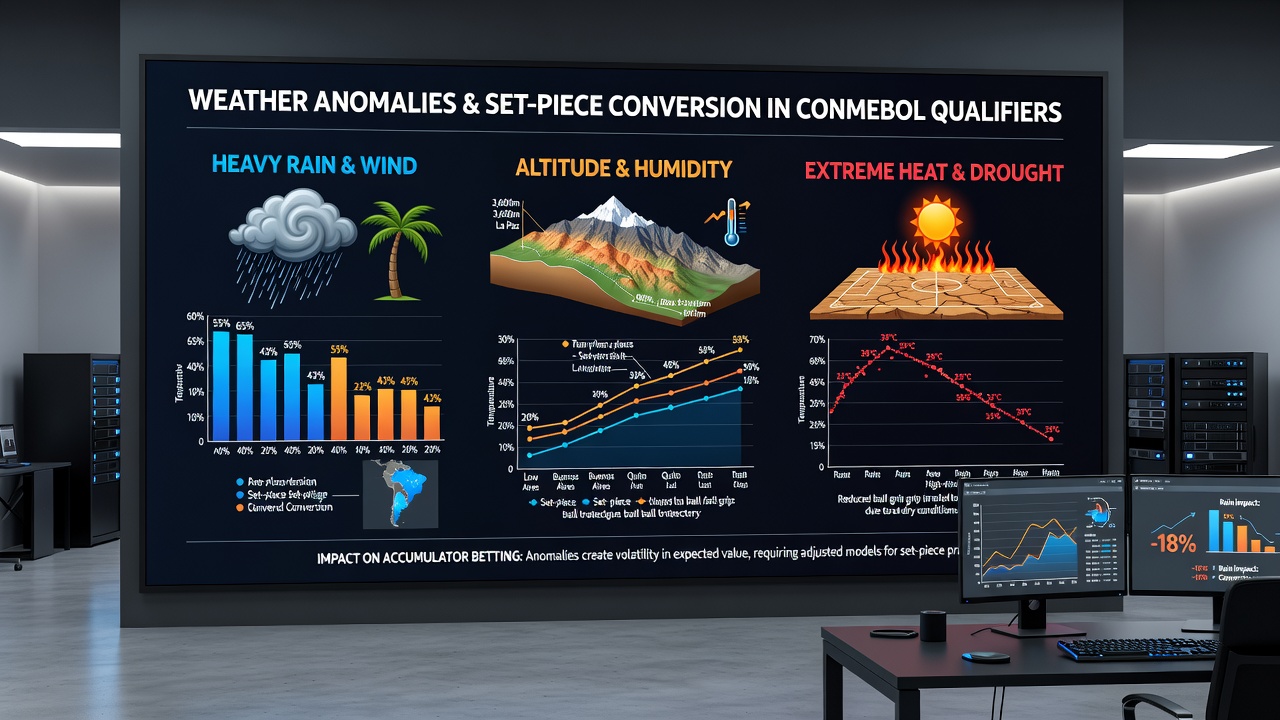
Analysis of historical qualifier data further reveals that temperature anomalies exceeding two standard deviations from long-term averages coincide with altered goalkeeper positioning on set pieces, since keepers adjust depth to account for changed ball speeds. Teams playing in such environments show varied success rates on short-corner routines, where wet or gusty conditions increase the likelihood of turnovers before shots are taken.
Observed Patterns in Accumulator-Relevant Markets
Statistical reviews of CONMEBOL qualifiers demonstrate that set-piece conversion rates serve as reliable inputs for markets focused on total corners, goal counts from dead-ball situations, and player-specific props. When weather services forecast anomalies, historical figures show measurable adjustments in expected conversion rates, allowing structured tracking of over and under thresholds. Researchers compiling these figures have linked specific precipitation thresholds above 10 millimeters per hour with reduced headed-goal percentages, while sustained winds above 30 kilometers per hour correlate with higher volumes of blocked attempts.
Records from the ongoing 2026 cycle, including November 2026 matches, continue to supply fresh datasets that confirm earlier observations. Those who examine match logs note consistent differences between venues with stable weather and those experiencing anomalies, particularly in matches involving multiple set-piece opportunities. Academic papers hosted by institutions such as the National Oceanic and Atmospheric Administration provide supporting climate data that helps contextualize these football-specific outcomes.
Comparative Analysis Across Qualification Windows
Side-by-side examination of earlier cycles against the current one highlights how recurring weather anomalies produce repeatable shifts in set-piece metrics. For instance, matches played under anomalous cold conditions in southern venues have produced lower conversion rates on penalties and direct free kicks than matches in neutral conditions. Meanwhile, tropical venues experiencing drier-than-average spells show slight increases in long-range free-kick success, attributed to firmer pitch surfaces that allow cleaner strikes. These documented variations supply the quantitative foundation used when assembling accumulator selections that incorporate set-piece related outcomes.
Further examination of November 2026 scheduling reveals several high-altitude and coastal fixtures where forecast models already anticipate deviations from historical averages. Such forecasts allow preparation based on established correlations rather than speculation, because the underlying meteorological and performance data remain publicly accessible through national weather agencies and match archives.
Conclusion
Weather anomalies exert measurable influence on set-piece conversion rates throughout CONMEBOL qualifiers by altering ball flight, surface conditions, and player adaptation. Records from multiple cycles, including the 2026 window, establish clear statistical links between specific meteorological variables and conversion percentages. Those who review these datasets alongside official match reports gain access to factual inputs that shape accumulator construction around corners, free kicks, and related goal markets. Continued monitoring of November 2026 fixtures will add new observations to an already extensive body of evidence drawn from CONMEBOL competition history.