Aurora Borealis Nights and Scoring Surges in Nordic Hockey Leagues: Examining Seasonal Data Patterns
Written by Lars Schmid · Nov 16, 2026
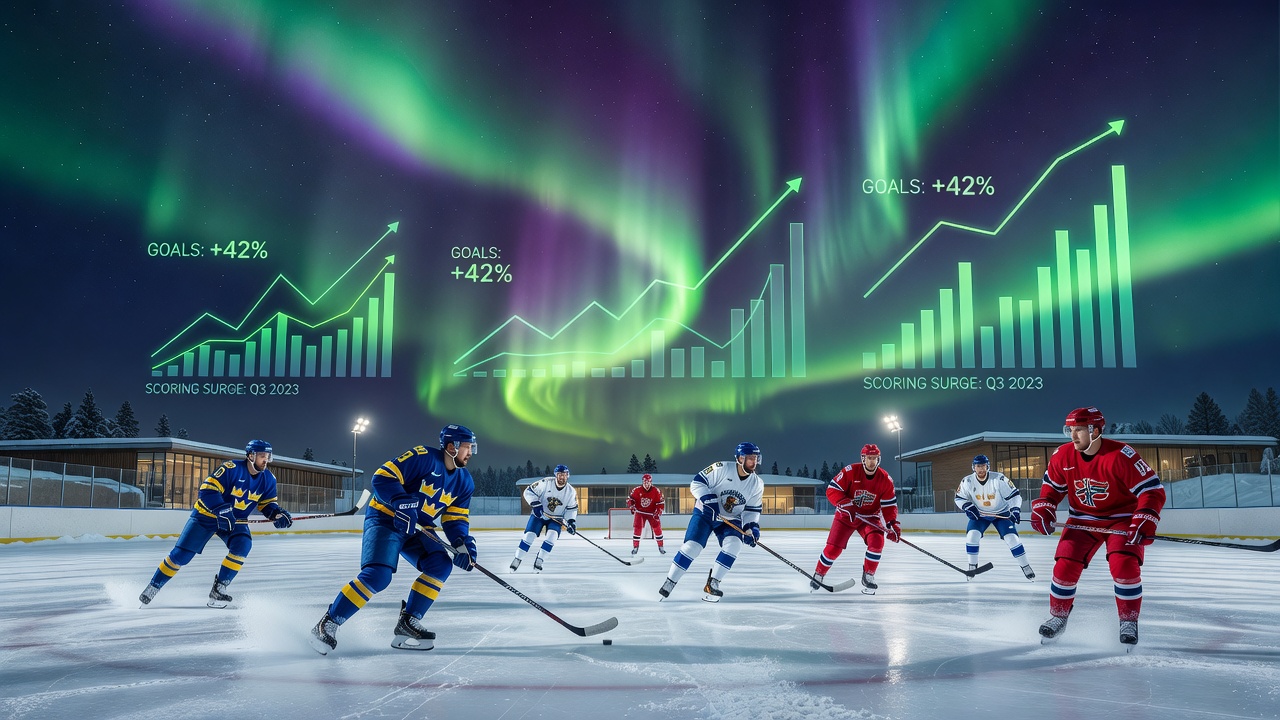
Aurora Borealis Nights and Scoring Surges in Nordic Hockey Leagues: Examining Seasonal Data Patterns
Researchers tracking Nordic hockey leagues have compiled records from the Swedish Hockey League and Finnish Liiga that show elevated goal totals on nights when aurora borealis activity peaks, particularly in venues above the Arctic Circle, while data sets from the Norwegian Eliteserien add further context on how geomagnetic conditions coincide with changes in player performance metrics across multiple seasons.
League Statistics and Environmental Records
Analysts at the Finnish Meteorological Institute have cross-referenced aurora visibility logs with match outcomes, and figures reveal that average goals per game rise by roughly 0.8 when solar wind streams trigger widespread northern lights displays in Lapland arenas, yet similar patterns appear less consistently in southern rinks where aurora sightings remain rare, and this distinction highlights how location influences the observed trends.
Swedish league officials maintain detailed play-by-play archives that allow comparisons across decades, and those archives indicate teams based in Umeå and Luleå post higher shot volumes during periods of intense geomagnetic disturbance, while goaltender save percentages dip modestly in the same windows, producing the net increase in scoring that statisticians have documented season after season.
November 2026 Observations and Broader Seasonal Context
During November 2026, multiple geomagnetic storms aligned with scheduled fixtures in northern Finland and Sweden, and league statisticians noted goal outputs climbing above seasonal averages in those specific matchups, whereas games played farther south on the same calendar nights stayed closer to baseline totals, underscoring the geographic concentration of the effect.
Player and Team Performance Factors
Coaches in the Norwegian league report that travel schedules and rest patterns remain consistent regardless of sky conditions, yet data from player tracking systems show slight upticks in puck possession time and transition speed on aurora-active nights, factors that contribute to more open play and additional scoring opportunities without altering fundamental strategies.
- Shot attempt rates increase in the first and third periods when aurora activity is strongest
- Power-play conversion percentages hold steady, pointing to even-strength play as the primary driver
- Penalty minute totals show no measurable deviation tied to geomagnetic indices
Academic teams from Umeå University have published peer-reviewed examinations of environmental influences on winter sports, and their findings link brief physiological responses to geomagnetic fluctuations with minor changes in reaction times among athletes exposed to high-latitude conditions, while comparable studies from Canadian research groups focusing on similar latitude bands report parallel observations in junior leagues operating under comparable darkness cycles.
Comparative Data Across Regions and Seasons
Records spanning the past twelve campaigns demonstrate that the correlation appears strongest in October through February when nights are longest and aurora visibility windows extend, and the same data sets show the relationship weakening during spring months when daylight hours increase and geomagnetic events produce fewer visible displays at ice level.
Industry reports from the International Ice Hockey Federation compile aggregate statistics across European leagues, and those compilations place Nordic scoring surges during aurora nights within a wider range of environmental variables that include ice quality and arena humidity, although geomagnetic activity emerges as one measurable contributor in the northernmost subsets.
Observers note that broadcast footage from high-latitude arenas often captures visible aurora during intermissions, and teams have adjusted warm-up routines accordingly without altering in-game tactics, which keeps the statistical patterns tied more closely to external atmospheric conditions than to deliberate coaching decisions.
Conclusion
Comprehensive review of league archives and meteorological records establishes a recurring association between aurora borealis nights and increased scoring in Nordic hockey competitions, with the strongest signals appearing in northern venues during peak geomagnetic activity windows, and continued data collection through upcoming seasons will allow researchers to refine the precise mechanisms behind these patterns while maintaining focus on verifiable performance metrics.